


Showing posts with label Buy New Car. Show all posts
Showing posts with label Buy New Car. Show all posts
Tuesday, 29 March 2016

New Car 2016 Chevrolet Camaro
New Car 2016 Chevrolet Camaro

the verdict: More
than ever, the redesigned 2016 Chevrolet Camaro SS can be likened to a
four-seat Chevrolet Corvette thanks to its heightened driving dynamics,
but its usability and comfort are more akin to a two-seater.
Versus the competition: The
redesigned 2016 Chevrolet Camaro SS tackles any track — straight or with
curves — with ease compared with the Ford Mustang GT and Dodge
Challenger R/T Scat Pack, but it might not be the one you most want to
drive off the track.
Nearly every dimension of the new Camaro is changed
for 2016 now that it rides on a lighter-weight platform, making it
lighter than the 2015 Camaro by more than 200 pounds. The lightening
combines with a stiffer chassis, new suspension design and a whole lot
more to make the Camaro an unbelievably capable handling machine in both
V-6 and V-8 versions.
Perhaps most interesting is that the Camaro does this
without the additional performance suspensions or packages competing
models require. A 455-horsepower, V-8-powered SS sits at the top of the
2016 Camaro lineup, above the 335-hp, V-6-powered LT. A 275-hp,
turbocharged four-cylinder becomes available in early 2016.
Exterior & Styling
A very similar design to the outgoing Camaro doesn't make the 2016 an immediate attention-grabbing shape. Even so, the body is completely different from the outgoing car, with only the SS and rear Chevrolet emblems carried over. The 2016 is 2.3 inches shorter from bumper to bumper and 0.8 inches narrower, and it's 1.1 inches lower at the roofline than the outgoing car.
A very similar design to the outgoing Camaro doesn't make the 2016 an immediate attention-grabbing shape. Even so, the body is completely different from the outgoing car, with only the SS and rear Chevrolet emblems carried over. The 2016 is 2.3 inches shorter from bumper to bumper and 0.8 inches narrower, and it's 1.1 inches lower at the roofline than the outgoing car.
How It Drives
Later years of the previous-generation Camaro used trick suspensions and chassis tuning in high-performance 1LE, ZL1 and Z/28 trims to manage the car's hefty curb weight extraordinarily well. The all-new SS is 223 pounds lighter than the old SS (3,685 versus 3,908 pounds) and picks up where those high-performance packages left off, with a lighter, more rigid chassis complementing the newly available Magnetic Ride Control adaptive suspension ($1,695). The system, which automatically adjusts shock absorber firmness to match road conditions and minimize body motion, was previously on the Camaro in ZL1 trim only. In addition to those on-the-fly adjustments, suspension firmness is adjustable between street and track modes for a comfort-oriented ride. Compare the old Camaro with the new one here.
Later years of the previous-generation Camaro used trick suspensions and chassis tuning in high-performance 1LE, ZL1 and Z/28 trims to manage the car's hefty curb weight extraordinarily well. The all-new SS is 223 pounds lighter than the old SS (3,685 versus 3,908 pounds) and picks up where those high-performance packages left off, with a lighter, more rigid chassis complementing the newly available Magnetic Ride Control adaptive suspension ($1,695). The system, which automatically adjusts shock absorber firmness to match road conditions and minimize body motion, was previously on the Camaro in ZL1 trim only. In addition to those on-the-fly adjustments, suspension firmness is adjustable between street and track modes for a comfort-oriented ride. Compare the old Camaro with the new one here.
The 2016 Camaro SS flat-out drives like a special
performance package car, not a "regular" SS, with both its standard
suspension and when optioned with the seemingly magical Magnetic Ride
Control suspension. A limited-slip differential, Brembo brakes and
driving mode selector are all standard. The previous SS wasn't
especially engaging to drive without the 1LE handling package or the
more extreme ZL1 or Z/28, so I'm thrilled the new SS starts at that
point with the addition of the MRC suspension. It's not hard to believe
Chevrolet's claim that the 2016 SS clicks off faster lap times than the
outgoing 1LE.
The SS is tight, responsive and has aggressive vigor
at the first flick of the steering wheel to dart into a corner. Keep
turning the steering wheel and there's minimal body lean while the car
tracks through turns with little fuss and a whole lot of rewarding grip.
Even with optional performance packages, such as the Dodge Challenger's
R/T Scat Pack and the Ford Mustang GT's Performance Pack, neither
competitor handles as confidently as the Camaro when flying through
corners. Compare the new Camaro with the Mustang and Challenger here.
Complementing the Camaro SS' handling prowess
perfectly is the new 455-hp V-8, which is available in both manual- and
automatic-transmission cars, up from 426 hp for the old manual and 400
hp for the automatic. First used in the 2015 Corvette, this
next-generation 6.2-liter V-8 in the Camaro provides ample power from
the basement of the power band up to redline. Like the Corvette,
multiple driving modes are the key to unlocking the 2016 Camaro SS'
multiple personalities through the adjustable steering, throttle
response, suspension (with Magnetic Ride Control), exhaust (when
equipped with the optional dual-mode performance exhaust) and
transmission (on automatic cars). Modes include Tour, Sport, Track and
Snow/Ice.
The six-speed manual's only adjustability is the
Active Rev Matching feature, which blips the throttle while downshifting
to match engine and transmission speed during downshifts. Active Rev
Matching replaces heel-and-toe downshifting and may be the lazy way out,
but I'll take it. I just wish it would stay activated; you have to turn
it on through the steering-wheel paddles (like the Corvette) at each
startup.
Tour mode turns the Camaro with Magnetic Ride Control
into a surprisingly comfortable road-tripper, with ride quality that's
not overly firm. Track mode firms up the suspension to filling-rattling
rigidity; it's the go-to for twisties, but you don't want to keep it
there too long — for your back's sake. Intruding into the pleasant
riding experience is an excessive amount of road noise compared with the
Mustang and Challenger. It's one of those tradeoffs typically
associated with high-performance hardware, as more solidly mounted,
rigid pieces transmit more noise than soft, compliant chassis
components. At least in the Camaro, there's a clear reward for that
extra road noise in its superb handling.
One thing you get to hear plenty of — in a good way —
is the optional exhaust that uncorks the V-8's sweet noises with an
electronically controlled exhaust valve. It's a must-have feature for
$895. While a version was available on the previous Camaro, this
go-around it's even better: It's both tied to driving modes and
independently adjustable, so you can pair a comfortable suspension
setting with the most aggressive exhaust. You aren't forced into a loud
exhaust mode if you don't want one in Track mode. About 95 percent of my
driving was with the exhaust in the most aggressive mode.
Interior
Those hoping for better visibility from the notoriously cave-like Camaro will be disappointed with the 2016. In fact, rearward visibility might be worse than before with what seem like smaller rear-quarter windows. There's a workaround, however, in that blind spot monitoring and rear cross-traffic alert are available on some trims. No other car could benefit from these features as much as the visibility-challenged Camaro.
Those hoping for better visibility from the notoriously cave-like Camaro will be disappointed with the 2016. In fact, rearward visibility might be worse than before with what seem like smaller rear-quarter windows. There's a workaround, however, in that blind spot monitoring and rear cross-traffic alert are available on some trims. No other car could benefit from these features as much as the visibility-challenged Camaro.
Serious track drivers may have another complaint with
the interior sizing, considering wearing a helmet sucks up what little
headroom exists. The seat will have to be slammed to the ground, and
possibly reclined, for most drivers to fit in the car in a helmet. It's
even worse with the optional moonroof. Being forced out of a comfortable
driving position isn't ideal for confidence on the track, so you may be
shopping for a new helmet if your current one doesn't fit.
Contributing to the claustrophobic interior is a new
dashboard with a tall double-humped hood over the gauge cluster that
sits way too high for the car's slit-like windshield and side windows.
The lump doesn't usually cut into visibility, but you're forced to look
at this big plastic eyesore in an otherwise sleekly styled interior. It
doesn't even look that well-put-together, with strange gap alignments
between the trim pieces.
Interior quality as a whole isn't very impressive on
lower-end models, like a V-6 1LT we recently tested. The SS adds
additional padding and decorative trim on the door to class up the
experience, but does so only slightly. Both the Mustang GT and
Challenger R/T Scat Pack are more nicely appointed as far as having
soft-touch, higher-quality materials in areas where you want them, such
as the door panels and dashboard.
Other than the bathtub-like visibility, the front
seats are extremely comfortable, with supportive cushioning that's even
comfortable while driving long distances — though some editors couldn't
find a comfortable seating position thanks to the angled headrests.
You'll definitely feel shoehorned into the car sitting in those front
seats, even though comfort levels are high. There's not an airy or
relaxed feeling, like you'll find in the Challenger's and Mustang's
interiors. And the backseat? The Challenger wins here as the only coupe
with enough room to fit passengers. Both the Camaro and Mustang don't
have the headroom to fit anyone adult-sized in the backseat.
Ergonomics & Electronics
Two touch-screen sizes are available in the Camaro. A standard 7-inch touch-screen comes with Apple CarPlay and Android Auto compatibility for simplifying phone-to-car connectivity and providing navigation at no added cost. As of publication, the optional 8-inch touch-screen comes only with Apple CarPlay.
Two touch-screen sizes are available in the Camaro. A standard 7-inch touch-screen comes with Apple CarPlay and Android Auto compatibility for simplifying phone-to-car connectivity and providing navigation at no added cost. As of publication, the optional 8-inch touch-screen comes only with Apple CarPlay.
I primarily used the 8-inch touch-screen with Apple
CarPlay, and the screen itself is a bit of an oddity, with its face
angled downward — both touch-screens are like that. The screen reflects
the console and passenger seat during midday sunny driving. It's awkward
to use at first, but it doesn't take long to forget the odd setup and
become accustomed to using the touch-screen for phone, navigation and
media controls.
Apple CarPlay seamlessly integrates an iPhone's
streaming music applications, hands-free calls, navigation and text
messaging. There's no Chevrolet-specific app to download, like some
automakers require, and no convoluted Bluetooth pairing procedure — the
USB cord is required to fire up CarPlay on the Camaro's media screen.
Apple CarPlay and the Camaro's standard built-in 4G
LTE connectivity with Wi-Fi hot spot provide a one-two punch for
road-trip media. The Camaro comes with a three-month/3GB free trial
before a subscription is required, which ranges from $15 to $50 a month
depending on data plan. The car's stronger receiver and rooftop antenna
received data out in the boonies where my phone couldn't, and through
the Wi-Fi we were able to stream music even in rural areas via
phone-based internet radio apps. In more reception-friendly areas, the
signal proved strong enough for my co-pilot to video chat with his
family.
When you're not using CarPlay, digital buttons on the
screen are big and easy to use in Chevrolet's MyLink system, and there's
a physical volume knob plus additional volume and track-change buttons
on the steering wheel. Tuning radio stations is done with buttons
flanking the volume knob; I'd rather see them replaced with a dedicated
tuning knob for quick and easy satellite or terrestrial radio station
changes.
Cargo & Storage
Like the interior, the Camaro's 9.1 cubic feet of cargo room is at a disadvantage compared with the Mustang's and Challenger's 13.5 cubic feet and huge 16.2 cubic feet, respectively. The cargo area is smaller than in the 2015, down from 11.3 cubic feet, but it proved enough for two people's luggage and the multimedia gear we carried for a few days on the road. There was spillover of various gear into the backseat that wouldn't fit into the trunk. The coupe's backseat folds in one big section, not split like the competitors, plus the opening isn't quite as large as the backseat.
Like the interior, the Camaro's 9.1 cubic feet of cargo room is at a disadvantage compared with the Mustang's and Challenger's 13.5 cubic feet and huge 16.2 cubic feet, respectively. The cargo area is smaller than in the 2015, down from 11.3 cubic feet, but it proved enough for two people's luggage and the multimedia gear we carried for a few days on the road. There was spillover of various gear into the backseat that wouldn't fit into the trunk. The coupe's backseat folds in one big section, not split like the competitors, plus the opening isn't quite as large as the backseat.
Safety
The Camaro has not been crash-tested as of publication. Coupes come with side-impact and knee airbags for front occupants and side curtain airbags for front and rear occupants. A backup camera with predictive backup lines is standard on all Camaros and is especially useful with the larger touch-screen.
The Camaro has not been crash-tested as of publication. Coupes come with side-impact and knee airbags for front occupants and side curtain airbags for front and rear occupants. A backup camera with predictive backup lines is standard on all Camaros and is especially useful with the larger touch-screen.
Visibility is an issue, somewhat mitigated by the
available blind spot warning system and rear cross-traffic alert. Rear
cross-traffic alert notifies you when a vehicle approaches from either
side while you're reversing at low speeds, and it's so valuable in this
car because you can't see squat when backing out of a parking space.
All these features provide confidence while driving
the Camaro, but the cost of entry is high: Blind spot monitoring and the
rear cross-traffic alert don't become available until the $30,795 2LT,
and to get them there you'll have to add a $2,800 Convenience &
Lighting Package. On SS models, the $42,295 2SS trim comes with blind
spot monitoring standard, but it's not available on the $37,295 1SS.
(All prices include destination fee.) See here for more of the Camaro's safety features.
Value in Its Class
The Camaro is thoroughly entertaining to drive yet perfectly livable on long trips when equipped with the new magnetic suspension and standard adjustable driving modes. You can actively seek curvy, fun roads in Track mode, have a riot, then comfortably drive down the highway to your next destination in Tour mode. That type of dual character, executed as well as it is in the Camaro, often comes in much pricier sports cars. The Camaro isn't cheap, though, with an as-tested price of $46,080 for our SS. And while the car is absolutely more capable than the outgoing SS, you pay a big price in everyday usability with its limited visibility and cramped interior.
The Camaro is thoroughly entertaining to drive yet perfectly livable on long trips when equipped with the new magnetic suspension and standard adjustable driving modes. You can actively seek curvy, fun roads in Track mode, have a riot, then comfortably drive down the highway to your next destination in Tour mode. That type of dual character, executed as well as it is in the Camaro, often comes in much pricier sports cars. The Camaro isn't cheap, though, with an as-tested price of $46,080 for our SS. And while the car is absolutely more capable than the outgoing SS, you pay a big price in everyday usability with its limited visibility and cramped interior.
Standard features for the new Camaro are impressive:
automatic climate control, a 7-inch touch-screen with Android Auto and
Apple CarPlay, a backup camera, dual front power seats, and keyless
access with push-button start. The SS' starting price of $37,295 is a
big jump over the 2015's $34,500, but it's such a different car, with
the lighter weight and stiffer chassis combined with more power.
The most appropriate Challenger trim for comparison is
the Challenger Scat Pack, which starts at $38,990, plus a $1,000
gas-guzzler tax. Ford still offers a stripped V-8 GT for $33,295. As
equipped, the last Mustang GT we tested was $45,885, and the previous
Challenger R/T Scat Pack was $46,165. More than $45,000 for this type of
sports coupe isn't unheard of in the segment. One thing's for sure:
Both of those cars have their work cut out for them with the 2016 Camaro
prowling the streets.
Sunday, 27 March 2016
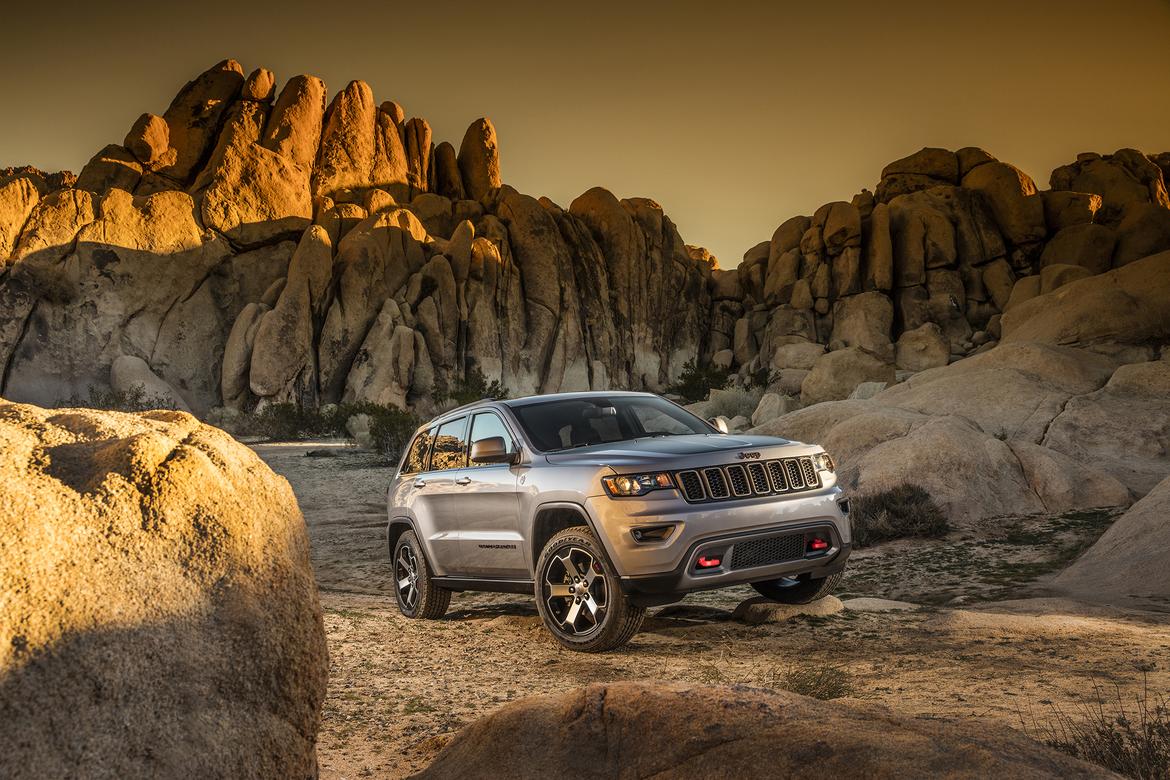
Jeep shows 2017 Grand Cherokee Trailhawk, Summit
Jeep Unveils 2017 Grand Cherokee Trailhawk, Summit
Manufacturer image
2017 Grand Cherokee Trailhawk
The Grand Cherokee Trailhawk first appeared as a concept car for the 2012 Easter Jeep Safari in Moab, Utah, one of Jeep's favorite places to try out new ideas. The Trailhawk name typically accompanies off-road-capable goodies, and the Grand Cherokee Trailhawk is no exception. It comes with the most capable Quadra-Drive II 4x4 system and includes an electronic limited-slip rear differential. The suspension is a special version of the Grand Cherokee's Quadra-Lift air suspension that features additional travel and improved wheel articulation for off-road obstacles. Hill Ascent Control and Selec-Speed Control electronic speed controls also are included.The Trailhawk wears the front fascia and seven-slot grille that made its debut on the 2016 75th Anniversary Edition model, as well as a special flat-black appliqu‚ for the hood. Like the smaller Renegade and Cherokee Trailhawk models, the Grand Cherokee Trailhawk gets front and rear red tow hooks. It also has 18-inch or optional 20-inch wheels with Kevlar-reinforced off-road tires, Trailhawk and Trail Rated badges in red, and gray mirrors and roof-rack accents. Skid plates are standard, and for added underbody protection, you can get some Mopar rock rails.
On the inside, you won't want to be too muddy when you slide into the black leather and suede performance seats. Piano black and gunmetal-finish trim replaces wood, and red stitching is on the seats, doors and console. The 8.4-inch Uconnect touch-screen features special 4x4 performance pages and is standard.
2017 Jeep Grand Cherokee Summit
The Summit is the most luxurious Grand Cherokee (but not the most expensive, that's the fire-breathing SRT model). Jeep is updating the Summit for the 2017 model year with a new front fascia and LED headlamps, new 20-inch polished wheels and a new leather-lined interior.The Laguna leather interior in Indigo and Ski Gray is one of four optional color schemes (the others are Black, Brown and Dark Sienna Brown), and it is the most dramatic. Nappa leather covers the dashboard, center console and door panels, while Laguna leather covers the seats. A suede headliner, lighted door sills and acoustic glass are standard. Berber carpet mats, active noise cancellation and a Harmon/Kardon 19-speaker stereo also are standard.
Frankly, just about everything is standard on the Summit model, including the Quadra-Drive II 4x4 system with electronic limited-slip differential and air suspension. All of the luxury goodies are included as well, including auto-folding mirrors and headlamp washers. You get electronic safety minders too, such as blind spot, forward collision and lane departure warnings; adaptive cruise control; and automatic parallel and perpendicular parking systems.
Both trim levels will arrive in dealer showrooms late this summer.
Friday, 18 March 2016
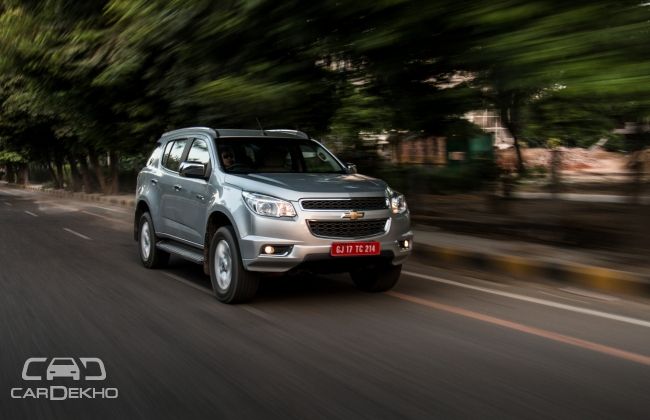
Car: Chevrolet Trailblazer Expert Review
Chevrolet Trailblazer: Expert Review
Americans are known for their obsession with buffed up things. Let it be their decked up ‘beef’ burgers or their vehicles, size has always been their top most priority. I have grown up watching American daily soaps and due to my innate love for automobiles, I always researched the cars used in them. The Escalade was a popular one - that brute was all about pure SIZE, it still is.
Chevrolet has carried the same legacy in their new SUV, the Trailblazer. But is it all about presence? Or is there more to this car than meets the eye? We find out.
Design
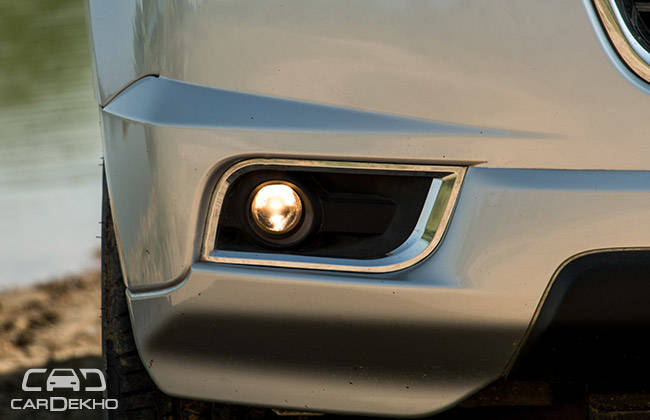
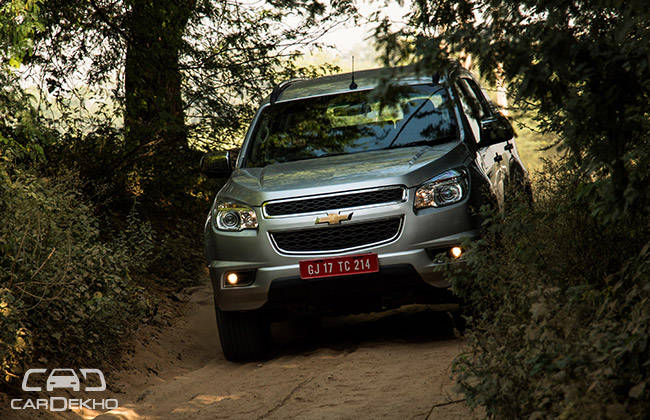
If size is the first thing that comes into your mind when you think of an SUV, you’ll find the Trailblazer very appealing. Defining its front end is Chevy’s traditional split grille which houses Chevrolet’s bowtie logo in the middle. Headlamps come equipped with projectors which is almost a standard in premium vehicles these days. It also gets projector fog lamps which is a segment first feature. However, the headlamps look a bit soft in comparison to the other design elements like the scooped-up bonnet design.
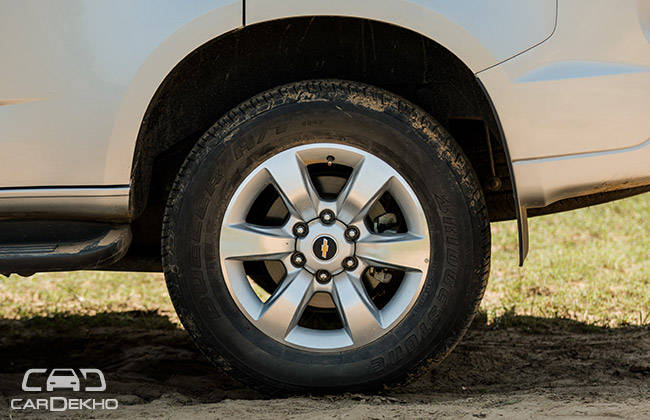
Side profile has a very simple design and unlike its competitors, it doesn’t get any cladding. It does have flared wheel arches and roof rails along with a rising window line that makes things a bit interesting. Trailblazer rides on massive 265/60 R18 tyres and there is a generous amount of space between the wheel arches and tyres.
Split LED tail lamps along with a massive chrome strip is what highlights the rear end of this car. Although it looks a lot like the current generation Toyota Fortuner, this is the best angle to admire this SUV’s design.

This brute looks massive in flesh and to justify the same point on paper, we have compared its dimensions with the segment leader- Toyota Fortuner below-
|
In mm
|
Chevrolet Trailblazer
|
Toyota Fortuner
|
|
Length
|
4878
|
4705
|
|
Width
|
1902
|
1840
|
|
Height
|
1847
|
1850
|
|
Ground Clearance
|
241
|
220
|
|
Wheelbase
|
2848
|
2750
|
Due to its 241mm ground clearance, you need to use the side-step to get inside the cabin which can get a bit tiring over a period of time. As soon as you get inside, the first thing you’ll notice is the towering view of the things that lay ahead. Driver gets a six-way adjustable power seat (no lumbar support) with a very commanding seating position carrying out the massive SUV feel into the cabin which is mainly beige in color except for the dashboard that gets two shades of black with matte and glossy piano black inserts.
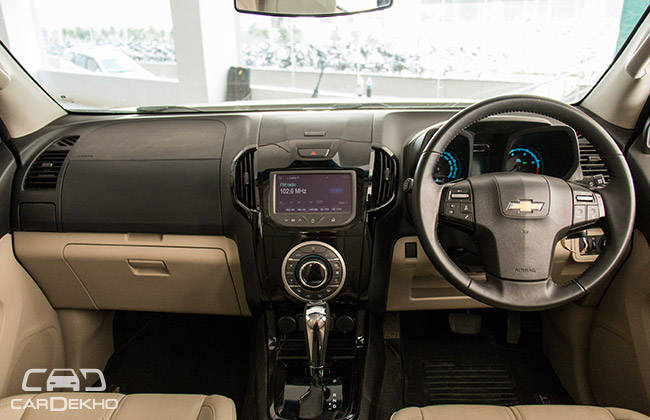
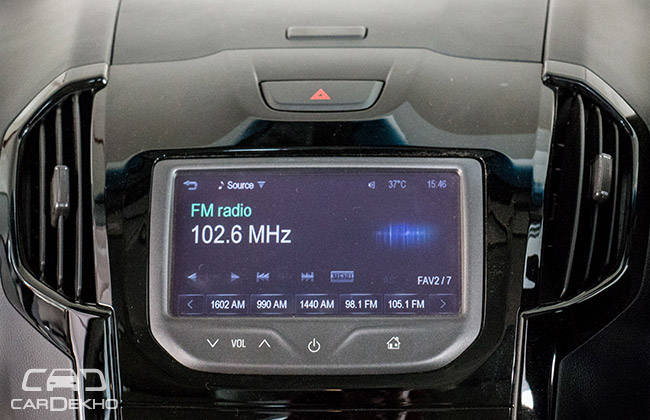
The centerpiece/highlight of the dashboard is a 7-inch touch screen unit called My Link featuring Bluetooth/USB/ AUX connectivity. However, it strangely misses out on Navigation which should have been standard in a 25 Lakh + vehicle. Chevrolet will be using the same My Link touchscreen unit into its other models soon.
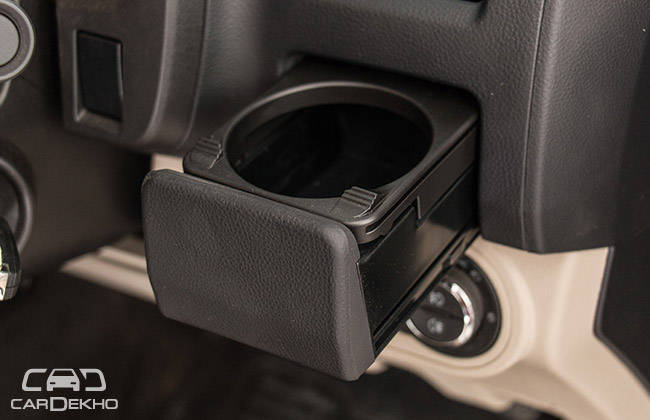
Trailblazer is rich on space and the interiors have also been designed intelligently. It gets sliding cup holders on both sides of the AC vents. The AC control cluster is very curvy in shape and gets a circular display screen in the middle which displays temperature, fan speed and other relevant parameters.
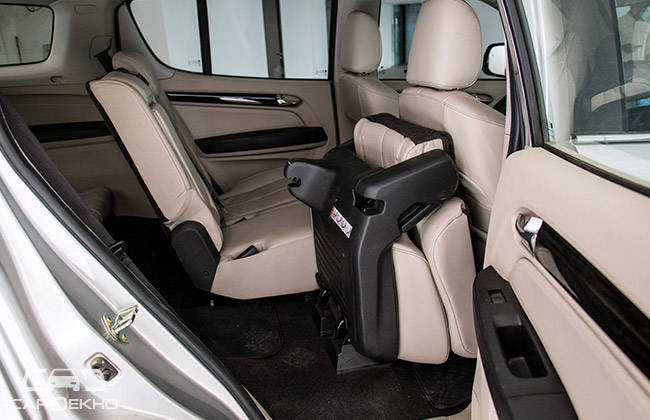
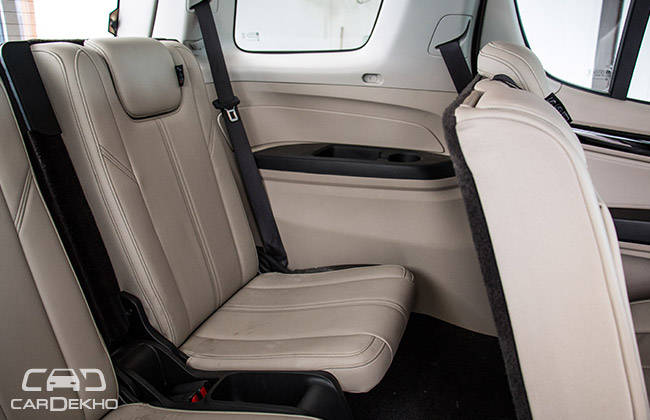
The middle row seats are comfortable enough for three people and there is sufficient legroom and headroom. Getting into the last seat is still a task like in any other 7/8 seater. In order to get in the back, you have to fold the middle seat that tumbles down with a 60:40 split. Third row seats offer good space as well, however due to a higher floor, there is no under thigh support. Still, most people should not feel any difficulty positioned in the last row for short trips. By folding the second and third row seats together, the boot volume can be extended to a maximum of 1830 litres, which is very impressive.There are four 12V sockets throughout the cabin making life easy for the rear passengers.
Engine and Performance
Powering this mammoth Chevy is a 2.8-litre Duramax diesel engine which is made out of cast iron block. This turbocharged oil burner produces class-leading 200 PS of power and 500 NM of torque which is around 30 PS/157 NM more than the it’s Japanese counterpart, Toyota Fortuner.
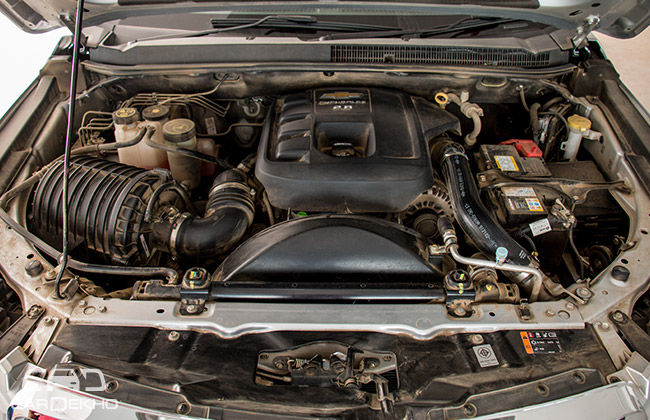
Caressing all of that torque is a 6-speed automatic transmission and we do not get the option of a manual transmission or a 4-wheel drive option.
As soon as you start driving the car, the first impression that you will get is that it that is a very rev happy engine. In fact it’s quite torquey and there’s very good punch at lower rpm’s as well. In city traffic conditions, despite it being huge and heavy (about 2 tonne), it is very agile and you can make a quick cut or overtake with ease. It drives better than most of its competition and this is a very big USP of the vehicle. Though in heavy traffic, the steering does require a lot of input which might be a problem for some drivers.
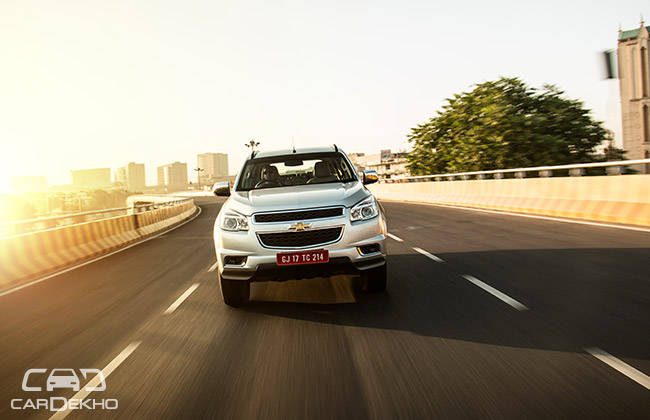
Only a 4X2 automatic variant spoils a lot of things as the Trailblazer comes with class leading 241 mm of ground clearance along with monstrous 18" wheels.
If Chevrolet adds a 4X4 variant later into this SUV, this can be one of the best off roaders in our market.
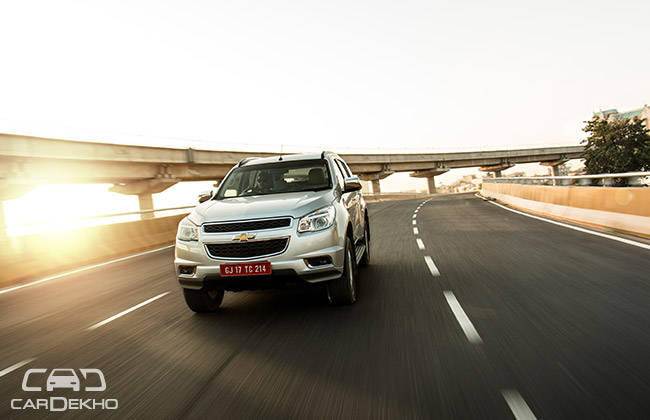
Suspension on the Trailblazer isn't extremely comfortable too. Though the front passengers still don't feel a large portion of the inconsistencies in tarmac, the back seat passengers will have a tough time bearing with majority of the jerks and bumps. Same goes for the third row passengers.
The 6-speed gearbox is responsive enough, and matches the driver’s throttle inputs. There is the choice of changing gears manually too. NVH (Noise Vibrations Harshness) levels have been keep well in control. At high speeds, this car might make you a bit nervous which is not very confidence inspiring. The steering does get heavier as you speed- up, but it doesn’t offer you the feedback that you expect to handle all that power.
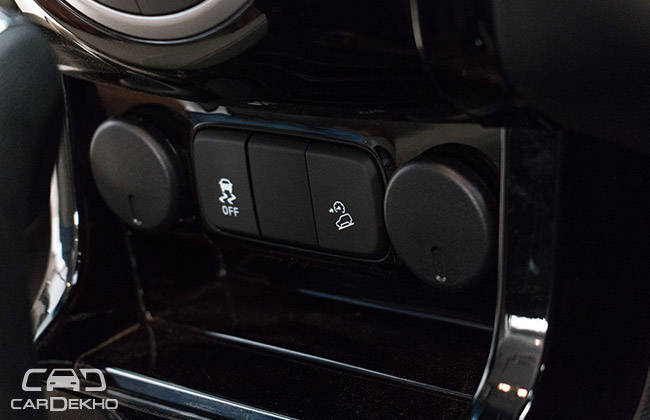
In terms of safety, Trailblazer comes equipped with front dual airbags, ABS-EBD, panic-braking assist, traction control with stability programme and hill descent control which make it fairly safe car to be in.
Verdict
To sum it up, Trailblazer replaces the Captiva and will surely keep Chevrolet’s mark in the premium SUV category alive. Priced at Rs. 26.4 lakhs (ex-showroom Delhi), it is costlier than the Fortuner’s 4X2 variant which is a good enough excuse for a lot of buyers to ditch the Chevrolet. Also, this vehicle will be only available as a CBU which will lead to higher maintenance costs. No 4X4 option and no manual transmission will also effect the sales in non-metro cities.
However, if you align with the ‘Size for Price’ mindset and are looking for a spacious 7- seater to do daily urban commuting along with the occasional outstation trips, then you can consider the all new offering from Chevrolet.
Pricing - Rs. 26,40,000 (ex-showroom Delhi)