Our Feeds
Showing posts with label Top Cars. Show all posts

Saturday, 9 July 2016

Unknown

Germany June 2016: Opel Astra snaps first podium in over 4 years

Germany June 2016: Opel Astra snaps first podium in over 4 years

Tesla Model X Germany June 2016. Picture courtesy auto-motor-und-sport


The German new car market gains a robust 8% year-on-year in June to 339.563 registrations, lifting the year-to-date total up 7% or 116.000 additional sales to 1.733.839. Last month, market leader Volkswagen was the only brand to lose ground in the Top 35, and this month the emissions scandal-embattled marque once again posts a negative result at -0.2% to 63.722 units and 18.8% share. Mercedes surges 13% to snap the overall 2nd spot away from Audi (+1%) while BMW displays even more dynamic growth at +17% in 4th place. Opel (+6%) holds Ford (+12%) at bay above Skoda, Renault (+30%), Hyundai (+13%) and Seat (-7%). Outside the Top 10 Suzuki (+21%), Dacia (+22%), Land Rover (+23%), Mazda (+24%), Jeep (+27%), Honda (+61%), Infiniti (+78%), Ssangyong (+81%), Jaguar (+101%) and Alfa Romeo (+119%) make themselves noticed, all improving at least twice as fast as the market.

VW Touran Germany June 2016. Picture courtesy autobild.de
VW Touran sales are up 138% year-on-year this month.
The VW Golf unsurprisingly retains the models crown but drops a worrying 7% to 21.995 units while the VW Passat crumbles 26% to 7.006 but remains #2. Boosted by the new generation, the Opel Astra is up 6 spots on May to land in third position: this is the nameplate’s first podium ranking in Germany since May 2012. The Audi A4 continues to catch up on lost time with its new model, up 23% to #4, while the VW Touran (+138%) and BMW 2 Series (+50%) post fantastic gains inside the Top 10. Just below, notice the BMW 1 Series (+16%), Skoda Fabia (+20%) and VW Up (+51%) all in great shape while further down the Skoda Superb (+100%), Hyundai i30 (+147%) and Mercedes GLC (+248% on the GLK) make themselves noticed. The Captur (+62%) is Renault’s best-seller in Germany this month ahead of the Megane (+44%) and Clio (+13%).
Tesla Model X Germany June 2016. Picture courtesy auto-motor-und-sport
The Tesla Model X has landed in Germany. 
The Hyundai Tucson is by very far the most successful recent launch at #35 with 2.719 sales this month, distancing the Fiat Tipo at #122 (+65 on May), the Renault Talisman at #148 (+3) and the Ford Edge at #149 (+55). We welcome no less than seven new nameplates in the German ranking in June, led by the Seat Ateca at #126 with 652 units sold, above the Fiat 124 Spider (#191), Alfa Romeo Giulia (#205), Hyundai Ioniq (#253), Maserati Levante (#259), Infiniti QX30 (#267) and Tesla Model X (#271).

Thursday, 31 March 2016

Unknown

2017 Ferrari California T Handling Speciale


See Other Cars Here
Unknown

2016 Rolls-Royce Dawn


2016 Rolls-Royce Dawn

2016 Rolls-Royce Dawn

2016 Rolls-Royce Dawn


First Drive Review
South Africa’s spectacular Chapman’s Peak Drive is bound by sheer cliffs on one side and plunges straight down into shark-infested breakers on the other. It’s more than 8000 miles from the Goodwood, England, headquarters of Rolls-Royce. Yet the new Rolls-Royce Dawn, the marque’s third convertible in 45 years, feels right at home—and not just because people drive on the wrong side of the road here. Savoring such dramatic scenes at moderate speeds in perfect late-summer weather is exactly the kind of experience for which this day has, um, dawned.

Will. Not. Be. Hypnotized.

In this intensely romantic setting, we must constantly remind ourselves that we’re here to scrutinize an ultra-expensive and, for Rolls-Royce, an important car. Its maker believes it to be the sexiest Rolls-Royce ever, one that’s bound to sell extremely well to extroverted upper-crusters who find the Dawn’s platform-mate, the Wraith coupe, too confining and its closest competitor, the Bentley Continental GT convertible, sooooo last decade, and perhaps a little too affordable. We must not let ourselves succumb to the intoxicating scent of its many cowhides—dyed Mandarin Orange in the case of our test car. The heavenly seats and creamy ride shall not hypnotize us, but they’re trying.
Earlier, in the picturesque highlands east of Cape Town, we were better able to focus on how well the 6.6-liter twin-turbo V-12 motivates the Dawn. Churning up 563 horsepower at 5250 rpm and 575 lb-ft of torque at 1500 rpm, the engine’s impressive power is omnipresent, yet it might take another 100 ponies or so to make the 5750-pound Dawn feel truly quick. The transmission is the same “satellite-aided” eight-speed automatic found in the Wraith, which uses GPS to select gears for upcoming hills and curves, although with so much torque on hand we hardly noticed the transmission shifting at all, regardless of curve or hill or cliff or passing slower traffic. Don’t even think about shifting for yourself: The Dawn offers no shift paddles or manual mode. It’s not that kind of car.
Rolls-Royce claims that the Dawn can hit 62 mph in 4.9 seconds, which is a few tenths behind the 624-hp Wraith coupe (which Rolls estimates weighs about 265 pounds less). We think it’ll be quicker. But that 4.9-second figure is less important than the unflappable silence with which it is achieved. Sure, if you get on it a bit, you’ll hear the faintest tone of V-12 thrum deep in the background, but the deliberately subdued and frankly uninspiring exhaust note may not prompt one to dip a toe any deeper.

The Silent Ballet

Raise the six-layer fabric top with its all-but-invisible, noise-reducing French seams, and you’ll be hard-pressed to tell the difference between the hardtop Wraith and the Dawn at speed. The so-called “silent ballet” of lowering or raising the roof requires a leisurely 22 seconds and is accompanied by absolutely no sound. Should the stoplight turn green midway through the process, the top can finish the task with the car in motion, at speeds up to 31 mph. Sadly, we had no opportunity to hear the pitter-patter of raindrops on the Dawn’s fabric roof, something Rolls-Royce avers is the most romantic thing ever, but if we did, we may have needed a 007-style listening device. This is one well-sealed top.
Although the Dawn’s thin-rimmed steering wheel is a bit reminiscent of those found in buses, fortunately, the car doesn’t steer like one. On-center numbness quickly yields to satisfying effort and feel as the wheel is whirled farther from center. Predictably, the Dawn’s massive steel body leans during hard cornering, yet it holds on heroically in corners and the car answers inputs with remarkable precision. That said, the formidable mass and the Dawn’s $340,000-ish price never strayed far from mind during our time at the helm, keeping us from pushing hard in corners. At one point on a particularly flat, lonesome stretch in the highlands, we saw 135 mph—a rather windy affair with the top down and, in the absence of much road feel, not an altogether pleasant one. It’s just as well that top speed is limited to 155 mph; we wouldn’t want to go faster.
Indeed, the Dawn is a beautiful creature best appreciated when the “Power Reserve” gauge remains close to 100 percent. Slower speeds allow onlookers to take in its curvaceous, proportionally perfect body while up to four adults are free to revel in its sumptuous interior without the distraction of a blurred landscape. No automaker delivers worldly delights quite like Rolls-Royce, and the Dawn is no exception, offering everything we love in the maker’s other models, including impossibly soft leather, vast swaths of aluminum trim and book-matched wood, and sparkling audio fidelity through the car’s incredible sound system. This is a car designed to help the leisure class do their leisure activities leisurely, whether scuttling from the golf course to the café or snaking along a scenic, cliff-side road such as Chapman’s Peak. Now if you’ll excuse us, we must get back to “work.”
Unknown

I Can't Believe It: I Don't Hate the Camaro Anymore

I Can't Believe It: I Don't Hate the Camaro Anymore

 
the Camaro Anymore

The first time I got into the new Camaro, the 2010 model year that would herald the return of the storied muscle car, I knew we weren't going to get along. Call it a personality clash, like the friend of a friend who everyone else thinks is really cool—but whom you can barely stand.   
The Camaro's manual transmission and the V8 power should have signaled the beginnings of a wonderful bromance. Instead, the low roof felt like it was crashing down upon my head. The sightlines were lousy and the massive blind spots in the rear made changing lanes dicey. 
Form ran rampant over function. The Camaro looked cool, but at great expense to the occupants. Frankly, it irked me.
Still, I had hopes for its performance, and I took the brand-new Chevy to a favorite path of tangled asphalt, my own private hill climb. I soon liked it even less. The car was big and heavy. It was impossible to see the edges of the fenders or gauge what the front tires were doing. The front was Novocain numb, the feedback from the road as fuzzy as an AM radio station in the middle of Texas. The suspension had apparently been set up by GM legal, as it defaulted to a persistent, maddening understeer.
I was sure the car would be a dismal sales failure. Consumers would head for the Mustang in droves. I couldn't have been more wrong. Sales rocketed and fans swooned. Which left me as an outlier among friends and colleagues as the Man Who Hates the Camaro. 
So, with the all-new generation being released, I had to wonder: Could I learn to love the Camaro? Because the changes sounded pretty good. A new, lighter platform and a body that was lower, shorter and narrower.     
But still, that roof . . . 
As winter waned I had an SS model delivered to my garage. I walked around it and found my head nodding. It was the same but different. The changes weren't clear in the way, say, a 996 911 looked different from the 997. But it was more approachable, more agreeable. More better.
In truth, my serious dislike of the Camaro had weakened to something like a significant aversion, a change attributable to the ZL1 and Z/28 models. I semi liked the ZL1. It had gobs of power and was a far livelier, more nuanced drive over the SS. Still, I kept comparing it to a sister model, the C6 Corvette ZR1. I love that car. I'd driven it at the so-called Lutz Ring at GM's Milford Proving Grounds, and it was everything I wanted in an American sports car. Sharp, fast, and tuned.  
Chevrolet CAMARO
The Z/28 simply had to be respected. It was bonkers, the ultimate expression of a fundamentally flawed car. Chevy engineers had gone all out, giving it rubber so slick that the car would spin like a dreidel if you hadn't warmed up the tires sufficiently. But once you had, you could push it harder and harder and it kept on giving. It dared you to be great with it. It was delightful in its lunacy. But of course, you still couldn't see the damn fenders and it was hard to tell how close you were to clipping a curb and there was, still, that roof.  
The 2016 Camaro rides on the GM Alpha platform, just like the excellent Cadillac ATS. And the SS shares the 6.2-liter V8 with the superlative C7 Corvette, along with smart details like rev-matching on the manual that can be turned on/off using shifter paddles and the flat-bottom steering wheel. (Yes, I really like the Corvette, but no, I was not a 'Vette guy until the C6 made me so. Older 'Vettes are too gaudy and full of plastic, but the evolution in quality and drivability is undeniable and a real achievement.) 
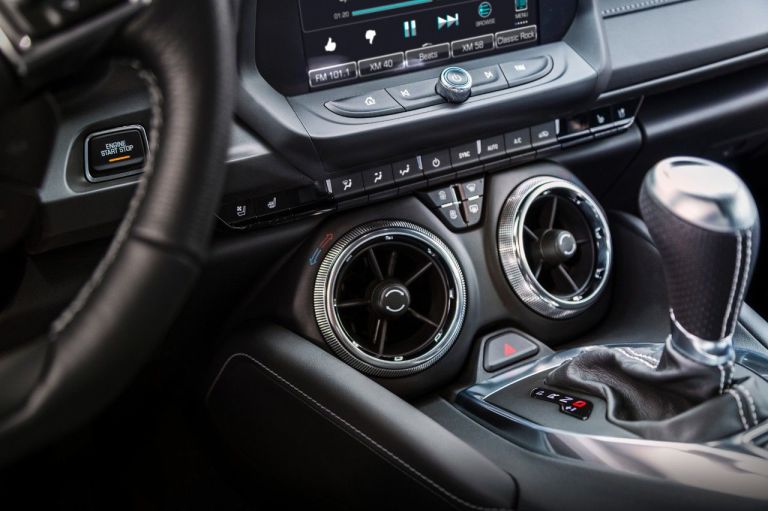
My test car was the 2SS model with $3800 of options, so it was the best of everything and not inexpensive at $46,095. But the interior was a huge step forward. Slick, in a good way, with a modern layout that makes it a far more pleasing place to be. The kitschy, useless engine gauges in front of the shifter are gone, and the stitching and some materials look moderately expensive.  
The interior was a huge step forward. Slick, in a good way.

The roof and high beltline and blind spots are still a problem, but they've been massaged. Maybe it's my imagination, but I felt like I could see out the front better than before, and the overall effect is less like that of a cell in a Federal Supermax prison.
Driving a car is a subjective experience. I knew the Camaro had lost a good 300 pounds and that the suspension had been reworked. But from the moment I pulled out of the garage, it just felt better. More natural and confident; happier at speed and certainly far more elegant around corners. 
Most of my time in the SS was on wet roads in low temperatures, which forced me to use the 455 horsepower and 455 pound-feet of torque judiciously. I tiptoed up to the limits of adhesion on slick corners—and just the fact that I could suss those limits was a major stride forward. And the optional Magnetic Ride Control was, as ever, a welcome addition.  
And when I wanted to get silly, the car was ready for it, all gruff V8 basso rumble and spinning rear wheels. It might be more sprightly, but it's still a muscle car, and that's a good thing. I'd like to spend more time with it in the summer months. And that's a stride forward, too.
Then, last week at the New York International Auto Show, Chevy showed us both the ZL1 coupe and convertible. And as I walked around it, with its massive lower maw, I felt the first real stirrings. Not of aversion or even grudging acceptance. But of want. 
The new generation is no longer a fundamentally flawed machine. Which means the ZL1 and the sure-to-arrive Z/28 could be very special indeed.


Unknown

Superman's Bugatti Chiron


Wednesday, 30 March 2016

Unknown

Lexus RX450h SE (2016) Review

Lexus RX450h SE (2016) Review

Lexus RX450h SE (2016) Review

The battle for supremacy in the premium SUV segment is as heated as ever with newcomers from Mercedes-Benz, Volvo and Audi slugging it out against the superb BMW X5 and Porsche Cayenne. Can Lexus’ dramatic fourth-generation RX make a bigger dent in the market than its forebears?

We like: Standard features, build quality, rear legroom
We don’t like: Real-world performance/economy, finicky infotainment controls, high boot floor
Alternatives:
  • For better economy: Consider the BMW X5 xDrive30d, Audi Q7 3.0 TDI and Mercedes-Benz GLE250d
  • For more space: The new Volvo XC90 D5 Inscription has seven seats as standard and more loading space, making it the ideal family/luxury SUV. The Audi Q7 3.0TDI is optionally available with seven seats, and is a spacious family car even in its standard five-seat format. 
  • For better value: It’s hard to beat the Lexus RX on overall value, but we think the biggest danger actually comes from in-house, from the RX350, which offers outstanding specification and a price that’s R200 000 lighter on the wallet.

Lexus RX goes for bold

Note striking 20-inch wheels and partly blacked-out C-pillar. 
Previous generations of the Lexus RX may have been sales successes in other markets, most notably the USA, but in South Africa and elsewhere the three earlier incarnations haven’t been able to ruffle the German trio’s feathers. It has always appealed to moneyed, intelligent folks less obsessed with the “right badge” and more interested in ultimate quality and value. Consequently, those wanting their luxury SUVs to make a flashy statement have traditionally given the RX a wide berth.
The new, fourth-generation Lexus RX constitutes a markedly different approach. Its angular, bold design is distinctive and the gaping “spindle” grille definitely lends the SUV added overtaking presence. Striking 20-inch wheels and a blacked out C-pillar are other design highlights that illustrate the new RX is no longer willing to hide in the shadows.
Inside, too, Lexus has thrown the previous company rulebook out the window and come up with a visually arresting, cockpit-like fascia design that is festooned with high-tech features that make people ooh and aah when they open the doors for the first time. So… the big news here is that you still get the virtues that made previous RX versions appealing (quality, features, comfort, refinement), but with huge dollops of “wow”.
Sounds appealing, right?

Who should consider the Lexus RX450h?

The Lexus RX450h SE is the flagship of the two-model line-up and is powered by a petrol-electric hybrid drivetrain. On paper its emissions and claimed fuel economy figures look very impressive, comparable to the turbodiesel engines offered by Volvo and the German luxury brands.
In some overseas countries, there is great value in these figures as they are rewarded by lower taxation, rebates etc. In South Africa, however, the emissions tax is added to the overall price of the vehicle, so there’s comparatively little benefit. Furthermore, the local target buyer for the RX450h needs to be aware that there’s little financial benefit in opting for a hybrid, especially when the real-world fuel economy is somewhat higher than the quoted figure, as is usually the case with these vehicles.
So why, then, consider the RX450h? It comes down to a couple of things. Firstly, it is hard to beat the Lexus for standard equipment. You’ll have to spend hundreds of thousands of Rands more on one of the German vehicles to match the RX’s luxury and features. Secondly, if you’re looking at a hybrid Lexus in the first place, you’ve arguably made the decision that you want to stand out from the herd of German SUVs. And with its sharp new design, the new Lexus RX certainly does that!

How does it fare in…

…comfort and luxury features?
Interior build quality is top notch and there's no shortage of features. (RX350 fascia pictured)
The RX450h SE is properly stocked with features, most of which will cost a lot more if specified on rival (German) brands’ products. For example, both front seats are multi-way electrically adjustable, cooled, heated and offer memory functions. In fact, the RX will even remember your seating position and move the (heated) steering wheel and seat out of the way to may ingress/egress easier.
You also get one of the biggest infotainment screens on the market as standard, a head-up display (HUD) and there’s a nifty pad in front of the transmission tunnel to recharge your mobile phone without the need for cables. Needless to say – this is a Lexus after all – the build quality is superb and the fittings are top class. One source of minor irritation was the ventilating fans in the seats that are rather noisy, a flaw highlighted by the otherwise quiet nature of the cabin.
You should have no reason to complain when it comes to entertainment. A thumping 15-speaker Mark Levinson sound system is standard, and you get two USB ports (as well as aux.) in the storage box between the front seats. It’s just a pity that the control interface for the infotainment system is so clumsy. The joystick/mouse input mechanism is overly sensitive and the system requires your eyes to be off the road for too long. Lexus desperately needs to go back to the drawing board on this…
The new RX is slightly longer, wider and lower than its predecessor, and the wheelbase has been lengthened. The result is significantly more rear legroom. In fact, the second row is particularly spacious, with seats with adjustable backrests that can slide fore/aft. There are even retractable sun blinds for rear passengers. Headroom is a trifle limited, however.
... performance and fuel economy?
Eco, EV, Normal and Sport modes are on offer. Note beautiful wood inlay. 
The RX450h SE is powered by a 193 kW/335 Nm 2.5-litre V6 engine mated with a 123 kW front electric motor as well as a 50 kW motor that forms part of the E-Four all-wheel-drive system. The flagship model’s combined power output has improved by 10 kW compared with its predecessor, with the total output now claimed to be 230 kW. The 450h SE utilises a continuously variable transmission (CVT) to deliver drive to all four wheels. Thanks to a number of improvements to the hybrid system, Lexus says that fuel efficiency for the 450h has improved by 9.5% to a claimed combined cycle figure of 5.7 L/100 km.
The reality, however, is that the RX450h struggles to achieve that claimed figure, which is not surprising – many petrol-electric hybrids do. In fact, during day-to-day driving you’ll do well to achieve figures of less than 9.0 L/100 km. The full electric (EV) mode is only available at very small throttle inputs, and at lower speeds, so if you’re thinking a luxury hybrid SUV will save you a lot of money at the pumps, think again. A turbodiesel SUV is likely to be far more economical.
In terms of performance, the RX450h also appears to have an advantage, but the combined output flatters to deceive. In reality, the CVT appears to dull the responsiveness of what should be a far livelier drivetrain. Yes, matters do improve in Sport mode but, again, a turbodiesel BMW (or Porsche… or Audi…) will be the better choice if lively performance is a must-have attribute. It is also odd, given that there’s a Sport mode, that the RX450h SE doesn’t offer steering-mounted gearshift paddles.
… practicality
No shortage of rear legroom. Seats can slide, fold and recline, too. Boot size is limited, though.
The RX450h is about as long as a BMW X5 or Porsche Cayenne, but more compact than the Volvo XC90 or Audi Q7. It was not designed to offer third-row seating, and with its swoopy fastback styling was clearly not conceptualised to be the last word in family-friendly packaging.
Open the (slow) electrically operated tailgate and you’ll find a luggage area that is about average in size for this category of vehicle, and which has a very high load floor courtesy of the standard fitment of a full-size spare wheel. Of course, if more packing space is needed you can fold down the middle row, which can conveniently be done by using levers mounted in the sidewall of the boot. But, keep in mind that the load surface won’t be even due to the stepped nature of the boot floor.
So, in terms of luggage space, the RX450h falls some way short of the best in class. But there are some clever touches. For example, if you lift up that boot floor, you will find a reasonably sized storage compartment to accommodate smaller/fragile items, and if you're really short of space, you can always remove the foam insert that “fills out” the upside-down alloy wheel and put more items in there.
In the cabin, the door pockets are big and can even fold out, and there’s another storage compartment in the front passenger footwell. We also like the flat design of the fascia. Combined with the grippy leather that covers it, you have a perfect place to rest magazines/books on a long road trip.
To summarise, then, the RX450h is probably right-sized for a family of four.
… ride and refinement
The big wheels contribute to a slightly fidgety ride on poor road surfaces.
As we’ve come to expect from Lexus, the NVH (noise, vibration, harshness) control of the RX's passenger compartment is quite superb. The vault-like cabin lets in hardly any noise when cruising and the sturdiness of the materials and general rattle-free nature of the fittings further enhance the perception of refinement. So it’s just those noisy seat fans that irritate.
The engine, too, is smooth and quiet when you’re out of the hustle and bustle of the city and the ride quality is exemplary in these circumstances...
But there are some niggles. Those beautiful 20-inch wheels (standard) are probably to blame for a ride quality that turns a little too fidgety over rippled and inconsistent surfaces. And, as is usually the case with continuously variable transmissions (CVTs), the revs shoot up upon throttle input and stays up there until you’ve reached the desired speed and ease off the throttle. Are we nit-picking? Perhaps, but the context is the competition, and a vehicle such as Audi’s new Q7 feels noticeably more refined in this department… and that’s a diesel.
And what about handling? Well, the RX450h is hardly positioned as a "sporty" SUV so it won't match an X5 or Cayenne in the corners. There's substantial body roll to contend with, but grip levels are high and the RX always feels planted and secure. It features Lexus's VDIM (Vehicle Dynamics Integrated Management) system that controls the ABS, brake assist (BA), electronic braking distribution (EBD), traction control, and VSC (vehicle stability control) in a coordinated fashion for ultimate smoothness and stability. During general driving the steering weighting is pleasantly light and accurate. In-town manoeuvrability is boosted by the standard fitment of front and rear parking sensors as well as a reverse-view camera. Rear cross-traffic alert is also part of the package.

Verdict

In its latest guise, the Lexus RX450h SE is a significantly more appealing prospect than its predecessor due to (in no small measure) its stand-out new design. As ever, the standard features list is unmatched at the price and the quality is top notch. Compared with its (turbodiesel) German rivals that sell for similar money there are, however, a couple of issues.
Firstly, the hybrid drivetrain promises much in theory, but doesn’t materialise in real-world operating conditions. Want the best combination of performance and economy? Then opt for a turbodiesel. And secondly, we can overlook some of the ergonomic failings (such as that fiddly control interface), but by the standards of most premium SUVs, the luggage bay's packaging is quite severely compromised.
Overall, however, these foibles are remarkably easy to forgive not only because the RX offers so many more features than its similarly-priced German rivals, but also because it is a genuinely likeable machine that now, finally, has some character. Still, we think its cheaper sibling, the RX350, looks like the real star… A full review on that model is coming.

Pricing

The Lexus RX450h SE sells for R999 000 and comes with a 4-year/100 000 km warranty and maintenance plan. The hybrid battery has an 8-year/195 000 km warranty. Servicing is required every 15 000 km.

Unknown

Toyota Fortuner (2016) Specs and Pricing Announced

Toyota Fortuner (2016) Specs and Pricing Announced


 SPP6110Resize


The wait is finally over and the Toyota Fortuner is here. We have specifications and pricing for the new-generation version of this popular SUV.

Since 2006 the Toyota Fortuner has been an exceptionally popular vehicle for the offroad and outdoor enthusiasts. Despite its basic underpinnings from a Toyota Hilux, the Fortuner has proved itself time and time again, and it remained a strong seller right to the end of its long product life. The new Toyota Fortuner was announced internationally last year and immediately one could see that it represented a substantial step up from the current model. “The new Fortuner has a long, wider stance versus the outgoing model, and its capabilities to adapt into every environment like a chameleon have been reinforced,” says Calvyn Hamman, sales and marketing Senior Vice president of Toyota South Africa Motors.
The new Toyota Fortuner shares many components with the recently launched Hilux. These include headline items like new diesel engines, new gearboxes and offroad technology. Much like the Hilux, there's also a big focus on ride comfort, reduced noise/vibration/harshness and an effort to give the vehicle a premium look and feel inside. The Toyota Fortuner is a seven-seat vehicle and there's considerable improvements in terms of space and practicality for all passengers. Premium soft-touch materials are used around the dashboard, windscreen pillars and door trims. The second-row seating features a 60/40 split and features a slide function as well as reclining backrests. Third-row seating is split in half 50/50 and features a recline function. Both of the rows can be stowed with just one touch, which gives the Fortuner more luggage space. 

Specification

The standard specification in the Toyota Fortuner is substantial. Audio systems with four to six speakers, an auxiliary/USB port, AM/FM radio and a CD player all come standard. The radio on the 2.8 GD and 4.0 V6 come with DAB+ digital radio and a 7” screen with DVD compatibility, as well as a reversing camera display. The flagship 4.0 V6 comes with satellite navigation.There's also Bluetooth connectivity, steering-wheel audio and telephone controls, as well as power door locks, windows and mirrors. Air conditioning is also standard and there are ventilation controls for the second-row passengers. The glovebox is air-cooled, meaning you can store two 500ml bottles.  For those who require additional power, all models feature three 12-volt accessory sockets.
The facia borrows elements from the new Hilux, but the overall design is unique to this model.

Engine and economy

Powering the new Toyota Fortuner are the latest diesel engines as well as the petrol units which we're familiar with. There's the 2.4 and 2.8 GD motors on the diesel side, while the petrol line-up includes the familiar 2.7 VVT-i and a 4.0 V6 motor. The 2.4 has 110kW and 400Nm of torque and the 2.8 GD offers up 130kW and 420Nm when paired with the manual transmission. The automatic derivative has 450Nm of torque. Fuel consumption is rated at 7L/100km for the 2.4 manual, while its automatic sibling is rated at 7.9L/100km. The 2.8 litre GD engine returns between 7.5 to 8.5L/100km. Towing capacity is rated at 2.5 tons for the 2.4 GD and 2.7 VVT-i models and at 3 tons for the 2.8 GD and 4.0 V6. The two petrol engines include a revised version of the familiar 2.7 litre VVT-i with 122kW and 245Nm which debuts in the Fortuner, while the 4.0 V6 pushes out 175kW and 376Nm. 
All vehicles are available with the latest six-speed manual and automatic gearboxes from Toyota. The manual gearbox offers intelligent manual transmission for smoother gearchanges as it matches the engine revolutions. 

Safety

The Toyota Fortuner should be safe too and includes a number of features such as Vehicle Stability Control (VSC), Active Traction Control (ATC), Trailer Sway Control (TSC), Hill-start Assist Control (HAC) and Drive Mode Select. Downhill Assist Control (DAC) is available on only the 4x4 models. There are big 338mm brakes at the front, with 312mm anchors on stopping duty at the rear. Under heavy braking, the hazard lamps will flash to provide an emergency signal to other road users. There are a large number of airbags too, depending on the model. 
Handsome new looks are far removed from its predecessor.

Toyota Fortuner Model Features

Entry grade (2.4 GD-6 and 2.7 VVT-i)
  • Push start
  • Tilt and telescopic steering column
  • Cruise control
  • Speed sensing auto door lock
  • Front and knee airbags
  • Illuminated entry
  • Chilled glovebox
  • Front fog lamps
  • Rear spoiler
  • Roof rails
  • Side steps
  • 17” alloys
  • Full alloy spare wheel
     
Standard grade (2.8 GD-6)
 
  • Leather upholstery
  • Front, knee, curtain and side airbags
  • LED headlamps
  • Follow-me-home auto lights
  • Auto air conditioner
     
High grade (4.0 V6)
  • All features of the standard grade
  • Power back door
  • Navigation system

Toyota Fortuner (2016) Price in South Africa

Toyota has not only come to market with a wider model line-up than the new Ford Everest, but has also priced very aggressively. Yes... expect to see many of these Fortuners on our roads, very soon. 
2.4 GD-6 Raised Body Manual: R436 400
2.4 GD-6 Raised Body Automatic: R453 400
2.7 VVT-i Raised Body Automatic: R429 400
2.8 GD-6 Raised Body Manual: R513 400
2.8 GD-6 4x4 Manual: R571 400
2.8 GD-6 Raised Body Automatic: R531 400
2.8 GD-6 4x4 Automatic: R589 400
4.0 V6 4x4 Automatic: R633 400
All retail prices include a three-year/100 000km warranty and five-year/90 000km service plan.
Unknown

5 New Cars Govt Ministers Can Afford in 2016

Five New Cars Govt Ministers Can Afford in 2016


16C181 017


The 2016 Budget speech killed off hopes that office-bearing politicians may have had of procuring first class sedans and premium SUVs at the government's expense. We suggest five vehicles that will comply with the ministerial handbook and provide respectable transport

According to Finance Minister Pravin Gordhan the new car allowance is subject to “new guidelines to limit the value of vehicle purchases for political office bearers”. The furore over ministerial vehicle purchases refuses to subside; the issue came to a head in 2009 when some ministers were accused of wasteful expenditure on vehicles costing in excess of R1-million.
As it stands now, the ministerial handbook dictates vehicle purchases must not exceed R750 000, which rules out many vehicles commonly associated with the "blue-light brigade". This has got us thinking. Which vehicles would be most appropriate for our government officials, yet tick the affordability boxes both in terms of outright purchases and running costs.

Lexus ES


For those wanting comfort, a multitude of features and generous rear legroom, the Lexus ES is hard to fault. Not only is well built, it’s also reasonably cheap to run. The engines offer reasonable performance and return respectable fuel consumption. The boot’s hugely spacious, plus the ES is generic in the styling department, so you can arrive at events discreetly.

Toyota Fortuner


The new Toyota Fortuner has just been launched and it's a rugged, capable vehicle that offers affordable (by large SUV standards) comfort and luxury. Expect some powerful engines and it’ll seat seven passengers in comfort. With its offroad ability, crossing any terrain will be easy and this vehicle is perfect for those who work in the remote regions of South Africa.


Mercedes-Benz E-Class


The new Mercedes-Benz E-Class was launched internationally and it’s due in SA soon. While it’s significantly cheaper than the popular flagship Mercedes-Benz S-Class, it incorporates several new technological features and boasts a level of refinement that many would expect from a first class car. The E200 costs R709 357; which even leaves room for extra spec!


BMW 5 Series


Politicians who were previously partial to the 7 Series will be forced to scale down because as the latest model exceeds the R750 000 limit. The good news is that the BMW 520i and 520d falls within this price limit and the better news is that it’s a really good drive too. For those who drive themselves, they’ll be rewarded with a sporty and luxurious driving experience...


Land Rover Discovery Sport


If the Toyota Fortuner is deemed too uncomfortable and not premium enough for our ministers’ needs, then we can recommend the Land Rover Discovery Sport. It won Best Leisure vehicle in the Cars Awards and this Discovery Sport SD4 SE version is R100 000 within budget. It’ll go offroad comfortably and even boasts seven-seat practicality.

Tuesday, 29 March 2016

Unknown

New Car 2016 Chevrolet Camaro

 New Car 2016 Chevrolet Camaro 

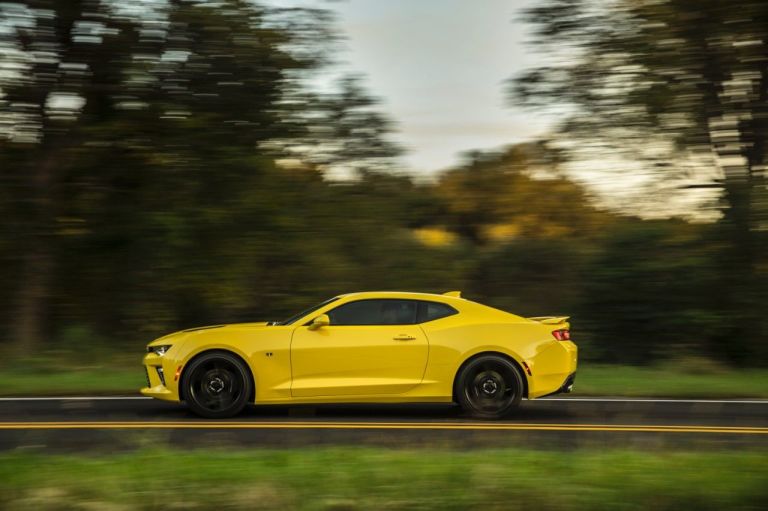
the verdict: More than ever, the redesigned 2016 Chevrolet Camaro SS can be likened to a four-seat Chevrolet Corvette thanks to its heightened driving dynamics, but its usability and comfort are more akin to a two-seater.
Versus the competition: The redesigned 2016 Chevrolet Camaro SS tackles any track — straight or with curves — with ease compared with the Ford Mustang GT and Dodge Challenger R/T Scat Pack, but it might not be the one you most want to drive off the track.
Nearly every dimension of the new Camaro is changed for 2016 now that it rides on a lighter-weight platform, making it lighter than the 2015 Camaro by more than 200 pounds. The lightening combines with a stiffer chassis, new suspension design and a whole lot more to make the Camaro an unbelievably capable handling machine in both V-6 and V-8 versions.
Perhaps most interesting is that the Camaro does this without the additional performance suspensions or packages competing models require. A 455-horsepower, V-8-powered SS sits at the top of the 2016 Camaro lineup, above the 335-hp, V-6-powered LT. A 275-hp, turbocharged four-cylinder becomes available in early 2016.
Exterior & Styling
A very similar design to the outgoing Camaro doesn't make the 2016 an immediate attention-grabbing shape. Even so, the body is completely different from the outgoing car, with only the SS and rear Chevrolet emblems carried over. The 2016 is 2.3 inches shorter from bumper to bumper and 0.8 inches narrower, and it's 1.1 inches lower at the roofline than the outgoing car.
How It Drives
Later years of the previous-generation Camaro used trick suspensions and chassis tuning in high-performance 1LE, ZL1 and Z/28 trims to manage the car's hefty curb weight extraordinarily well. The all-new SS is 223 pounds lighter than the old SS (3,685 versus 3,908 pounds) and picks up where those high-performance packages left off, with a lighter, more rigid chassis complementing the newly available Magnetic Ride Control adaptive suspension ($1,695). The system, which automatically adjusts shock absorber firmness to match road conditions and minimize body motion, was previously on the Camaro in ZL1 trim only. In addition to those on-the-fly adjustments, suspension firmness is adjustable between street and track modes for a comfort-oriented ride. Compare the old Camaro with the new one here.
The 2016 Camaro SS flat-out drives like a special performance package car, not a "regular" SS, with both its standard suspension and when optioned with the seemingly magical Magnetic Ride Control suspension. A limited-slip differential, Brembo brakes and driving mode selector are all standard. The previous SS wasn't especially engaging to drive without the 1LE handling package or the more extreme ZL1 or Z/28, so I'm thrilled the new SS starts at that point with the addition of the MRC suspension. It's not hard to believe Chevrolet's claim that the 2016 SS clicks off faster lap times than the outgoing 1LE.
The SS is tight, responsive and has aggressive vigor at the first flick of the steering wheel to dart into a corner. Keep turning the steering wheel and there's minimal body lean while the car tracks through turns with little fuss and a whole lot of rewarding grip. Even with optional performance packages, such as the Dodge Challenger's R/T Scat Pack and the Ford Mustang GT's Performance Pack, neither competitor handles as confidently as the Camaro when flying through corners. Compare the new Camaro with the Mustang and Challenger here.
Complementing the Camaro SS' handling prowess perfectly is the new 455-hp V-8, which is available in both manual- and automatic-transmission cars, up from 426 hp for the old manual and 400 hp for the automatic. First used in the 2015 Corvette, this next-generation 6.2-liter V-8 in the Camaro provides ample power from the basement of the power band up to redline. Like the Corvette, multiple driving modes are the key to unlocking the 2016 Camaro SS' multiple personalities through the adjustable steering, throttle response, suspension (with Magnetic Ride Control), exhaust (when equipped with the optional dual-mode performance exhaust) and transmission (on automatic cars). Modes include Tour, Sport, Track and Snow/Ice.
The six-speed manual's only adjustability is the Active Rev Matching feature, which blips the throttle while downshifting to match engine and transmission speed during downshifts. Active Rev Matching replaces heel-and-toe downshifting and may be the lazy way out, but I'll take it. I just wish it would stay activated; you have to turn it on through the steering-wheel paddles (like the Corvette) at each startup.
Tour mode turns the Camaro with Magnetic Ride Control into a surprisingly comfortable road-tripper, with ride quality that's not overly firm. Track mode firms up the suspension to filling-rattling rigidity; it's the go-to for twisties, but you don't want to keep it there too long — for your back's sake. Intruding into the pleasant riding experience is an excessive amount of road noise compared with the Mustang and Challenger. It's one of those tradeoffs typically associated with high-performance hardware, as more solidly mounted, rigid pieces transmit more noise than soft, compliant chassis components. At least in the Camaro, there's a clear reward for that extra road noise in its superb handling.
One thing you get to hear plenty of — in a good way — is the optional exhaust that uncorks the V-8's sweet noises with an electronically controlled exhaust valve. It's a must-have feature for $895. While a version was available on the previous Camaro, this go-around it's even better: It's both tied to driving modes and independently adjustable, so you can pair a comfortable suspension setting with the most aggressive exhaust. You aren't forced into a loud exhaust mode if you don't want one in Track mode. About 95 percent of my driving was with the exhaust in the most aggressive mode.
Interior
Those hoping for better visibility from the notoriously cave-like Camaro will be disappointed with the 2016. In fact, rearward visibility might be worse than before with what seem like smaller rear-quarter windows. There's a workaround, however, in that blind spot monitoring and rear cross-traffic alert are available on some trims. No other car could benefit from these features as much as the visibility-challenged Camaro.
Serious track drivers may have another complaint with the interior sizing, considering wearing a helmet sucks up what little headroom exists. The seat will have to be slammed to the ground, and possibly reclined, for most drivers to fit in the car in a helmet. It's even worse with the optional moonroof. Being forced out of a comfortable driving position isn't ideal for confidence on the track, so you may be shopping for a new helmet if your current one doesn't fit.
Contributing to the claustrophobic interior is a new dashboard with a tall double-humped hood over the gauge cluster that sits way too high for the car's slit-like windshield and side windows. The lump doesn't usually cut into visibility, but you're forced to look at this big plastic eyesore in an otherwise sleekly styled interior. It doesn't even look that well-put-together, with strange gap alignments between the trim pieces.
Interior quality as a whole isn't very impressive on lower-end models, like a V-6 1LT we recently tested. The SS adds additional padding and decorative trim on the door to class up the experience, but does so only slightly. Both the Mustang GT and Challenger R/T Scat Pack are more nicely appointed as far as having soft-touch, higher-quality materials in areas where you want them, such as the door panels and dashboard.
Other than the bathtub-like visibility, the front seats are extremely comfortable, with supportive cushioning that's even comfortable while driving long distances — though some editors couldn't find a comfortable seating position thanks to the angled headrests. You'll definitely feel shoehorned into the car sitting in those front seats, even though comfort levels are high. There's not an airy or relaxed feeling, like you'll find in the Challenger's and Mustang's interiors. And the backseat? The Challenger wins here as the only coupe with enough room to fit passengers. Both the Camaro and Mustang don't have the headroom to fit anyone adult-sized in the backseat.
Ergonomics & Electronics
Two touch-screen sizes are available in the Camaro. A standard 7-inch touch-screen comes with Apple CarPlay and Android Auto compatibility for simplifying phone-to-car connectivity and providing navigation at no added cost. As of publication, the optional 8-inch touch-screen comes only with Apple CarPlay.
I primarily used the 8-inch touch-screen with Apple CarPlay, and the screen itself is a bit of an oddity, with its face angled downward — both touch-screens are like that. The screen reflects the console and passenger seat during midday sunny driving. It's awkward to use at first, but it doesn't take long to forget the odd setup and become accustomed to using the touch-screen for phone, navigation and media controls.
Apple CarPlay seamlessly integrates an iPhone's streaming music applications, hands-free calls, navigation and text messaging. There's no Chevrolet-specific app to download, like some automakers require, and no convoluted Bluetooth pairing procedure — the USB cord is required to fire up CarPlay on the Camaro's media screen.
Apple CarPlay and the Camaro's standard built-in 4G LTE connectivity with Wi-Fi hot spot provide a one-two punch for road-trip media. The Camaro comes with a three-month/3GB free trial before a subscription is required, which ranges from $15 to $50 a month depending on data plan. The car's stronger receiver and rooftop antenna received data out in the boonies where my phone couldn't, and through the Wi-Fi we were able to stream music even in rural areas via phone-based internet radio apps. In more reception-friendly areas, the signal proved strong enough for my co-pilot to video chat with his family.
When you're not using CarPlay, digital buttons on the screen are big and easy to use in Chevrolet's MyLink system, and there's a physical volume knob plus additional volume and track-change buttons on the steering wheel. Tuning radio stations is done with buttons flanking the volume knob; I'd rather see them replaced with a dedicated tuning knob for quick and easy satellite or terrestrial radio station changes.
Cargo & Storage
Like the interior, the Camaro's 9.1 cubic feet of cargo room is at a disadvantage compared with the Mustang's and Challenger's 13.5 cubic feet and huge 16.2 cubic feet, respectively. The cargo area is smaller than in the 2015, down from 11.3 cubic feet, but it proved enough for two people's luggage and the multimedia gear we carried for a few days on the road. There was spillover of various gear into the backseat that wouldn't fit into the trunk. The coupe's backseat folds in one big section, not split like the competitors, plus the opening isn't quite as large as the backseat.
Safety
The Camaro has not been crash-tested as of publication. Coupes come with side-impact and knee airbags for front occupants and side curtain airbags for front and rear occupants. A backup camera with predictive backup lines is standard on all Camaros and is especially useful with the larger touch-screen.
Visibility is an issue, somewhat mitigated by the available blind spot warning system and rear cross-traffic alert. Rear cross-traffic alert notifies you when a vehicle approaches from either side while you're reversing at low speeds, and it's so valuable in this car because you can't see squat when backing out of a parking space.
All these features provide confidence while driving the Camaro, but the cost of entry is high: Blind spot monitoring and the rear cross-traffic alert don't become available until the $30,795 2LT, and to get them there you'll have to add a $2,800 Convenience & Lighting Package. On SS models, the $42,295 2SS trim comes with blind spot monitoring standard, but it's not available on the $37,295 1SS. (All prices include destination fee.) See here for more of the Camaro's safety features.
Value in Its Class
The Camaro is thoroughly entertaining to drive yet perfectly livable on long trips when equipped with the new magnetic suspension and standard adjustable driving modes. You can actively seek curvy, fun roads in Track mode, have a riot, then comfortably drive down the highway to your next destination in Tour mode. That type of dual character, executed as well as it is in the Camaro, often comes in much pricier sports cars. The Camaro isn't cheap, though, with an as-tested price of $46,080 for our SS. And while the car is absolutely more capable than the outgoing SS, you pay a big price in everyday usability with its limited visibility and cramped interior.
Standard features for the new Camaro are impressive: automatic climate control, a 7-inch touch-screen with Android Auto and Apple CarPlay, a backup camera, dual front power seats, and keyless access with push-button start. The SS' starting price of $37,295 is a big jump over the 2015's $34,500, but it's such a different car, with the lighter weight and stiffer chassis combined with more power.
The most appropriate Challenger trim for comparison is the Challenger Scat Pack, which starts at $38,990, plus a $1,000 gas-guzzler tax. Ford still offers a stripped V-8 GT for $33,295. As equipped, the last Mustang GT we tested was $45,885, and the previous Challenger R/T Scat Pack was $46,165. More than $45,000 for this type of sports coupe isn't unheard of in the segment. One thing's for sure: Both of those cars have their work cut out for them with the 2016 Camaro prowling the streets.